close

Migros

STORIESZurich Blogging

Budget quality food places in Zurich

Budget Dining in Zurich: 5 Quality Spots Under 15 CHF

Living in Switzerland makes you creative when it comes to dining out while keeping costs under control. I’ve made it my mission to find places where you can get high-quality food for under 15 CHF. Whether you want a quick lunch or an easy dinner, these spots deliver taste without breaking the bank.

Check out more inspiration in my [Zurich Restaurant Guide]!

1. Putput (Japanese Takeaway)

This small takeaway in Kreis 4 focuses on fresh, quality ingredients at a fair price. It’s perfect for a quick, authentic bite.

  • Recommendation: The Gyudon or their Japanese vegetable curry.

  • Address: Stauffacherstrasse 101, 8004 Zürich

  • Costs: 11.50 – 15.50 CHF

  • Opening Hours: Mon 11:30–14:00 | Tue–Fri 11:30–14:30 & 17:30–21:00 | Sat 14:00–21:00

2. Palestine Grill (Lebanese Sandwich)

An absolute staple for a late-night snack or a casual lunch on Langstrasse. The pita bread is incredibly fresh and the portions are generous.

  • Recommendation: The vegetarian Sabich (fried eggplant, egg, and hummus—add fries if you want the full experience!).

  • Address: Langstrasse 92, 8004 Zürich

  • Costs: Starting at 11.50 CHF

  • Opening Hours: Mon & Tue 11:30–19:00 | Wed 11:30–21:45 | Thu–Sat 11:30–22:00 | Sun closed

3. Piadina Bar (Niederdorf)

Located in the heart of the Old Town, this is my go-to for authentic Italian flatbread. It’s thin, prepared fresh at the counter, and highly customizable.

  • Recommendation: The Piadina with grilled eggplant, arugula, and creamy stracchino cheese.

  • Address: Niederdorfstrasse 3, 8001 Zürich

  • Costs: Starting at 10.50 CHF

  • Opening Hours: Mon–Sat 11:30–23:00 | Sun 15:00–19:00

4. Il Pentagramma (Italian Panini)

This spot feels like a direct trip to an Italian holiday. The owner brings true Italian vibes and high-quality ingredients to the table. The portions are huge, so come hungry.

  • Recommendation: The panino with grilled vegetables and mortadella of fully vegetarian with Mozarella & eggplants!

  • Address: Josefstrasse 28, 8005 Zürich

  • Costs: Starting at 10.50 CHF

  • Opening Hours: Mon–Fri 09:00–15:00

5. Bridge Zurich (Europaallee)

A hub for local, handcrafted products. It’s a great place to discover new flavors beyond the standard lunch fare.

  • Recommendation: Skip the standard deli sandwich and grab a fresh, crunchy Vietnamese Bánh Mì. It’s the perfect budget-friendly, flavor-packed lunch option found here. If you’re still hungry, grab a slice of pizza al taglio from Flour & Water on the upper floor!

  • Address: Europaallee 22, 8004 Zürich

  • Costs: Various options for every budget

  • Opening Hours: Mon–Sat 09:00–22:00 | Sun closed

Looking for more food recommendations? Check out my food guide!

read more
STORIESZurich Blogging

Thinking loud part 1: What are sustainable palm oil products, how can we recognize them

We consumers need to understand that not all palm oil is bad and wiping out habitat or killing endangered species.

I love to use my blog to share stories about the topic “food“. It’s not always about going out for dinner or cooking creative recipes. I do care, where the product comes from and how I can somehow in my small portion support the planet. I am amazed about how palm oil is used and consumed in our daily life. This brought me to write this story.

We consumers can create more attention through social media nowadays. It’s a platform that opens doors. Being a bit critical has always been honored. I experience in my everyday life, that it’s good to give an eye on my shopping list. Although the industry isn’t made it is always very easy and transparent. I want to share with you my thoughts and research about sustainable palm oil.

A reflection about palm oil

There is much negative information and critics about palm oil. Some facts concern our planet, some our health. This story shall give you a short overview of the articles I found. I used the world wide web to gather all of my information. Contents derived from different official sources as WWF, Swissinfo, the RSPO Organisation a.o.

Let’s start from Adam: What is palm oil?

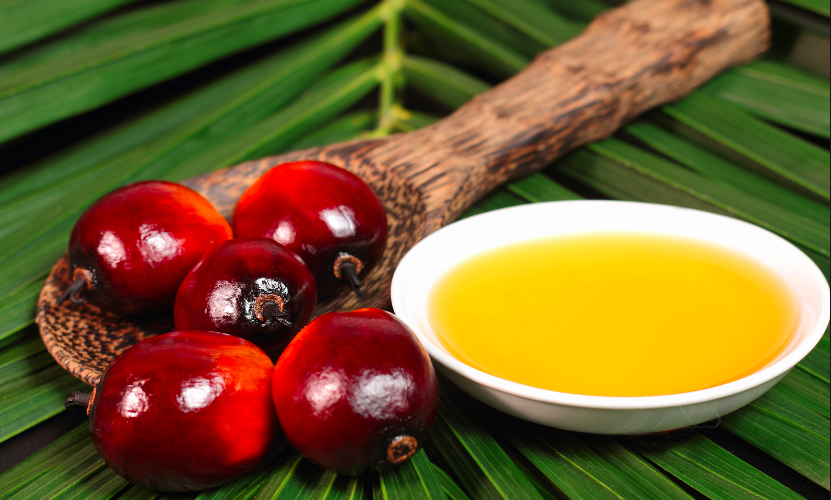
Palm oil comes from the pulp of the palm fruit and is red in color. Palm kernel oil comes from the seed.​ It’s an edible vegetable oil high in saturated fats and free of trans fats. The oil palm tree (Elaeis guineensis) is native to West Africa and was imported into South East Asia in the mid 19th century. Around 90% of palm oil is produced in Indonesia and Malaysia. One of the reasons for its popularity is its price, it is about 1/3 cheaper than soybean oil. Compared to other vegetable oils (such as rapeseed oil),  palm oil is more productive and requires less acreage.

We find palm and palm kernel oil in many processed foods, cosmetics and personal care products.

Palm Oil is also used to manufacture bio fuel and has become what is called the green fuel option for Motor Vehicles, shipping, and aircraft fuel.

The negative aspects we know about palm oil

In some regions, palm oil cultivation has caused – and continues to cause – deforestation. This means that land, which was once predominantly covered by primary forest or which housed protected species and biodiversity, was cleared in order to be converted into palm oil plantations. The cheapest and fastest way to clear land for plantations is slash and burn. Fires in Indonesia produce some of the world’s worst pollution. Especially the area of Sumatra and Borneo is very much affected.

I myself have visited the Tanjung Puting National Parkin in Kalimantan during my Indonesia travels and experienced the beauty of these species. These animals are unique in the world. It breaks my ears to read about what some people are capable to do with their life.

Protect the orang utan in Sumatra and Borneo

The Swiss biologist Regina Frey has first-hand experience of rainforest destruction in Sumatra. She is the founder of the PanEco foundationexternal link, which takes in homeless orangutans and reintroduces them into protected rainforest habitats. It has saved more than 200 apes this way.

Different reason caught my interest to explore more about this topic. Personal traveler experience, the passion for food and the lust to share information with my community.

There is a way to fix the issues mentioned. Deforestation-free palm oil is possible. We, consumers, need to understand that not all palm oil is bad.  Not all palm oil is wiping out habitat and killing endangered species.

The initiative for sustainable cultivation of palm oil: Roundtable on sustainable palm oil (RSPO)

The NGO called RSPO: Round table on Sustainable Palm Oil founded in 2004 set the goal to transform markets to make sustainable palm oil the norm. Representatives of palm plantations, manufacturing industry, social and environmental organizations as well as banks and retailers are represented in the organization. The RSPO has developed a set of environmental and social criteria which companies must comply with in order to produce Certified Sustainable Palm Oil (CSPO). Properly applied, these criteria can help to minimize the negative impact of palm oil cultivation on the environment and communities in palm oil-producing regions.
Big industrial companies as Ferrero or Unilever are partners of RSPO. They work extensively with their suppliers to keep a global responsible palm oil procurement policy.

This movie throws good light into the topic and makes us best understand how RSPO works.

Where to get sustainable palm oil products in Switzerland

In Switzerland Migros and Coop both play an important role for RSPO. Both retailers have been supporting the production of sustainable palm oil with the purchase of certificates. They cooperate with industrial companies that are buying palm oil from Swiss importers and processors who purchase physically sustainable, RSPO-certified palm oil. Besides these two retailers of course we have the choice to shop at organic shops, they that offer certified products, too. In Zurich, I like to go to BachserMärt in Seefeld or to Lochergut for example.

I found the search mode on the website of the Organisation Greenpalm very useful to check which companies are RSPO certified. Check it by yourself!

Sustainable cultivation in accordance with the RSPO principles and criteria means that no tropical forests have been burned for plantations since 2005, that the laws are complied with and that fair and safe working conditions prevail.

What we can do as a consumer

  • Buy products that are clearly certified with a sustainable label/certificate
  • Avoid finished food
  • Ask in the supermarket for the origin of palm oil, if it is not stated on the product
  • Try the WWF App to get practical information on the origin of food, even recipes
  • Use social media to learn more, get involved through a dialog at platforms as for example Migros offers. Migipedia is a place to share your voice and influence what retailers do

Get in contact here!

Drop me a line for input on my thoughts, share suggestions on other topics, I am happy to get in contact with you.

    Interested to know more about Lovefoodish, try my coffee guide where you get sustainable coffee at various coffee shops in Zurich.

    read more